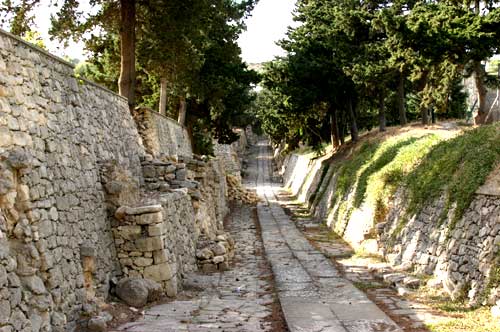
We hit the road again and after a lovely thirty-minute windy ride through all sorts of crazy-ass mountain terrain, we arrived at the Arkadia Monestary: which is one of Crete's most celebrated monuments of resistance against the mid-19th century Turkish occupation.
...before racing over to the cases and posing for pictures with the skulls of bad-ass, martyred Cretans who blew themselves up in order to take out some Turks.
And nope. No torture chamber either (Turns out the Minoans were an almost entirely peaceful civilization). We held out hope that there was at least a snack bar somewhere, but no such luck there either. There was however, a functional 5,000 year old plumbing system which our 80 year old tour guide told us she would demonstrate. For a second we were scared that she'd pop a squat right in front of us. But she just kind of pointed at it and told us how advanced the Minoans were. Obviously not advanced enough to leave some skulls or a torture chamber to cheer poor Fatty up.
Okay, so get this. There is no labyrinth, there are no minotaurs and not only that, there never was a minotaur. The myth is really just like a really, really, really long game of telephone. Turns out there was a king, Minos who was strong and possessed a bullish personality. The palace had like tons of rooms. Before the roof was put on it kind of looked like a maze to bemused locals. That's your labyrinth.
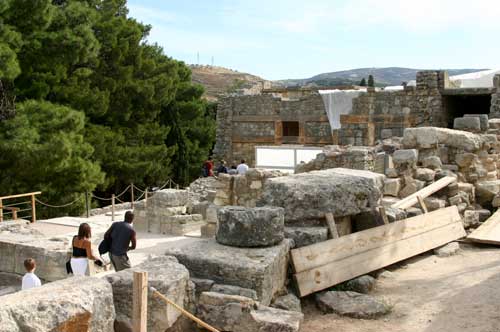
At the beginning of the tour, we were told that the palace ruins that we were exploring were from 3,000 BCE. So the whole time, we're walking around looking at this stuff in awe. Like "Wow this things been standing here for 5,000 years!" Then about halfway through the tour, our guide informed us that everything we'd been looking at was actually all reconstructed from piles of rocks discovered at the excavation site at the beginning of the 20th century.